

Ladakh Festivals, Dances, and Cultural Activities
Ladakh is not only a land of dramatic mountains and serene lakes but also a region rich in ancient traditions, colorful festivals, and vibrant cultural practices. Deeply influenced by Tibetan Buddhism, Ladakhi culture is expressed through its festivals, masked dances, music, and community celebrations.
Every festival in Ladakh reflects the region’s spiritual beliefs, agricultural lifestyle, and close-knit community life. Visiting Ladakh during festival season offers travelers a rare opportunity to witness traditions that have been preserved for centuries.
Major Festivals of Ladakh
Hemis Festival
The Hemis Festival is Ladakh’s most famous cultural celebration, held at Hemis Monastery. It marks the birth anniversary of Guru Padmasambhava, the founder of Tibetan Buddhism. The highlight of the festival is the colorful Cham dance, performed by monks wearing elaborate masks and costumes.
Losar (Ladakhi New Year)
Losar is the Ladakhi New Year and one of the most important festivals in the region. Celebrated with prayers, rituals, and family gatherings, it symbolizes new beginnings, prosperity, and good fortune. Homes are decorated, and traditional food is prepared to welcome the new year.
Dosmoche Festival
The Dosmoche Festival is celebrated to ward off negative energies and bring peace. Monks perform sacred rituals and masked dances at monasteries in Leh and Likir, creating a spiritually charged atmosphere for locals and visitors alike.
Traditional Ladakhi Dances
Cham Dance
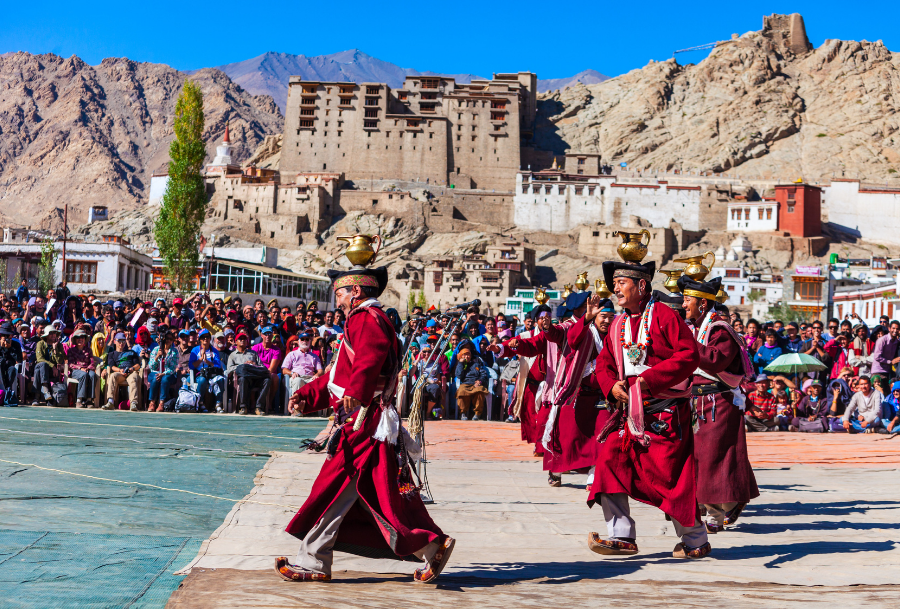
The Cham Dance is a sacred masked dance performed by Buddhist monks during festivals. Each movement has spiritual meaning, symbolizing the victory of good over evil. The vibrant costumes and rhythmic music make it one of Ladakh’s most captivating cultural experiences.
Jabro Dance
The Jabro Dance is a lively folk dance performed during weddings and celebrations. It reflects joy, unity, and the communal spirit of Ladakhi society. Men and women dance together in traditional attire, accompanied by local music.
Shondol Dance
Performed mainly during festivals and official events, the Shondol Dance showcases Ladakhi elegance and grace. Dancers wear colorful robes and turquoise jewelry, moving gracefully to slow, rhythmic music.
Cultural Activities in Ladakh
Beyond festivals and dances, Ladakh offers many cultural experiences that give insight into daily life:
- Monastery Visits: Participate in morning prayers and rituals at monasteries like Thiksey, Hemis, and Diskit
- Local Markets: Explore handicrafts, woolen goods, silver jewelry, and traditional Ladakhi clothing
- Village Life: Stay in homestays to experience farming, cooking, and traditional hospitality
- Music and Storytelling: Enjoy folk music and stories passed down through generations
These activities allow travelers to connect deeply with Ladakh’s living culture.
“A people without tradition are like a body without a soul.”
Traditional Ladakhi Proverb
Best Time to Experience Ladakh’s Culture
The best time to experience Ladakhi festivals and cultural events is between June and September, when:
- Most major festivals are celebrated
- Weather is pleasant for outdoor events
- Roads and monasteries are easily accessible
Winter months are quieter but offer insight into traditional indoor rituals and daily village life.


Why Ladakh’s Culture Is Truly Unique
Ladakh’s cultural richness lies in its:
- Strong Buddhist traditions
- Deep respect for nature and community
- Well-preserved festivals and rituals
- Warm hospitality and simple lifestyle
Experiencing Ladakh’s festivals, dances, and cultural activities is not just sightseeing — it’s becoming part of a timeless Himalayan heritage.